Mexico’s hotel scene has entered an era where luxury is no longer measured only by thread count or skyline views, but by intentional living: spaces designed to steady the mind, rituals that honor place, and service that feels quietly perceptive rather than performative. Across coasts and capitals, the most compelling properties are evolving beyond “beautiful stays” into environments that shape how you move, rest, eat, and reconnect. This evolution is not loud. It’s deliberate—seen in the way a lobby becomes a gallery of local craft, how a suite is tuned for sleep, or how a courtyard invites you to linger long after the last sip of mezcal. Below are defining themes that show how Mexico’s hotels are becoming more meaningful, more human, and—paradoxically—more luxurious because of it.
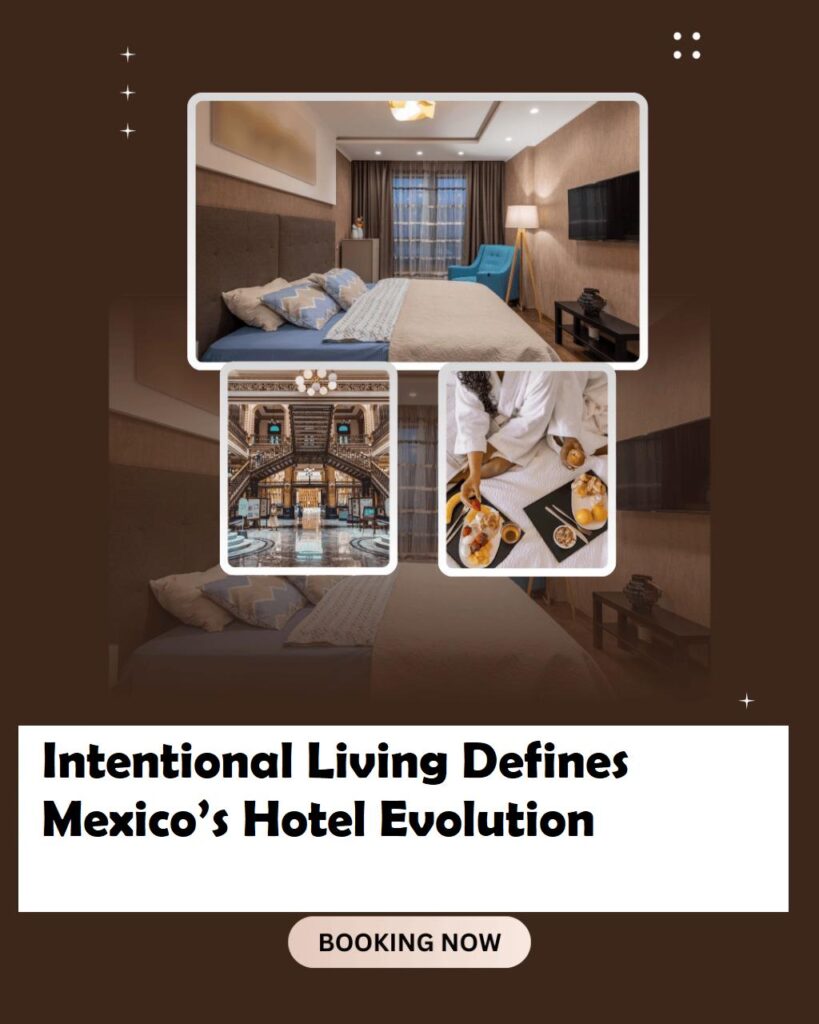
1) Design With a Purpose: Calm as the New Status
The newest measure of prestige is not excess, but clarity. Hotels leading Mexico’s evolution embrace restrained palettes, natural textures, and layouts that reduce decision fatigue. Rooms are arranged for flow—wake, shower, dress, work, rest—without visual clutter. You notice lighting that feels flattering at every hour, soundproofing that truly seals the city out, and materials that age gracefully rather than shout for attention. This is intentional living in physical form: the hotel anticipates what you need before you articulate it. The result is a kind of quiet authority—spaces that don’t try to impress you, yet somehow do.
2) Place-First Luxury: Mexico as the Main Character
The most memorable hotels no longer treat Mexico as a scenic backdrop; they let the destination write the narrative. In coastal enclaves, architecture follows breeze and shade rather than trend. In colonial cities, the best renovations preserve thick stone walls and courtyards, adding modern comfort with a respectful hand. Even scent becomes part of the story—copal in a hallway, citrus blossoms in a garden, warm cedar in a wardrobe. Intentional living means you feel located in every sense: your stay becomes a cultural immersion without the museum stiffness, a luxury that feels rooted rather than imported.
3) Wellness Without Theater: Rituals You Actually Keep
Mexico’s hotel evolution is shifting from “spa as spectacle” to wellness as a daily rhythm. The strongest properties treat rest as infrastructure: circadian-friendly lighting, thoughtful pillow menus, hydration rituals, and morning movement that fits real schedules. A great massage is still there, but so is the slower pleasure of a shaded plunge, herbal infusions that change with the region, and a breakfast designed for energy rather than indulgence alone. This approach doesn’t demand that you transform into a different person on vacation; it simply helps you return to yourself—more rested, more present, more awake to the world.
4) Culinary Intent: From Trendy Plates to Meaningful Tables
Food is becoming a language of values. Chefs are spotlighting regional ingredients, responsibly sourced seafood, heritage corn, and seasonal produce with a sense of purpose—less “look at me,” more “taste this place.” The dining room, too, is evolving: softer acoustics, fewer tables, better pacing, and service that feels like choreography. Even cocktail programs are shifting—agave spirits presented with context, botanicals tied to local landscapes, and pairings that prioritize balance. Intentional living shows up as nourishment: meals that feel celebratory without leaving you heavy, and flavors that remain in memory like a well-told story.
5) Service as Subtle Craft: The Art of Anticipation
What truly defines Mexico’s top-tier hotel evolution is emotional intelligence. The best service is increasingly understated—remembering your coffee order without making a show of it, arranging your room for how you actually use it, suggesting an experience that matches your mood rather than a generic itinerary. Staff become curators of ease: they remove friction, protect your privacy, and offer warmth that feels genuine. This is hospitality as craft—precise, human, and quietly elevated.
Q&A: Planning an Intentional Mexico Hotel Stay
Q: Which Mexico destinations best match “intentional living” travel?
A: Consider Mexico City for design-forward city sanctuaries and culinary depth, Riviera Maya for nature-immersed resorts that prioritize rhythm and restoration, Los Cabos for refined beachfront calm, and San Miguel de Allende/Oaxaca for boutique stays where culture and craftsmanship define the experience.
Q: Can you recommend a few hotels that embody this evolution?
A: Try Las Alcobas (Mexico City) for polished design and quiet sophistication, Four Seasons Hotel Mexico City for timeless garden serenity in a central location, Rosewood Mayakoba (Riviera Maya) for lagoon-side privacy and elevated wellness, Chablé Yucatán for a deeply restorative, cenote-inspired atmosphere, and One&Only Mandarina (Riviera Nayarit) for nature-integrated luxury with cinematic views.
Q: How do I choose the right hotel if I want calm, not crowds?
A: Look for properties emphasizing privacy—villa-style keys, low room count, generous outdoor space, strong soundproofing, and “experience by appointment” programming (wellness, dining, excursions) that avoids peak-time congestion.
Q: What’s one upgrade worth paying for?
A: A room category that improves daily life: a terrace, plunge pool, or lagoon/oceanfront positioning. The best luxury is the one you use every hour, not the one you photograph once.
Conclusion
“Intentional living” is what makes Mexico’s hotel evolution feel genuinely modern: a shift toward design that calms, service that understands, and experiences that restore rather than exhaust. These hotels aren’t just places to sleep between excursions—they’re environments that shape your pace, sharpen your senses, and make space for pleasure that feels unforced. In Mexico’s finest stays, exclusivity is no longer about grand gestures. It’s about precision: the right light at the right time, the right silence when you need it, and the rare feeling that every detail was chosen—on purpose—for you.