Mexico’s most compelling hotels don’t rely on spectacle alone. The stays that linger in your memory often feel effortless—rooms that guide you naturally from entry to terrace, lobbies that invite you to pause without crowding, and outdoor areas that flow like an extension of the landscape. Efficient layouts are not about minimalism for its own sake; they’re about clarity and comfort. When circulation makes sense and spaces are proportioned with intention, the guest experience becomes smoother, quieter, and more indulgent. Across Mexico, a new generation of properties is refining this idea: designing hotels that make every step feel considered, and every corner feel like it belongs.
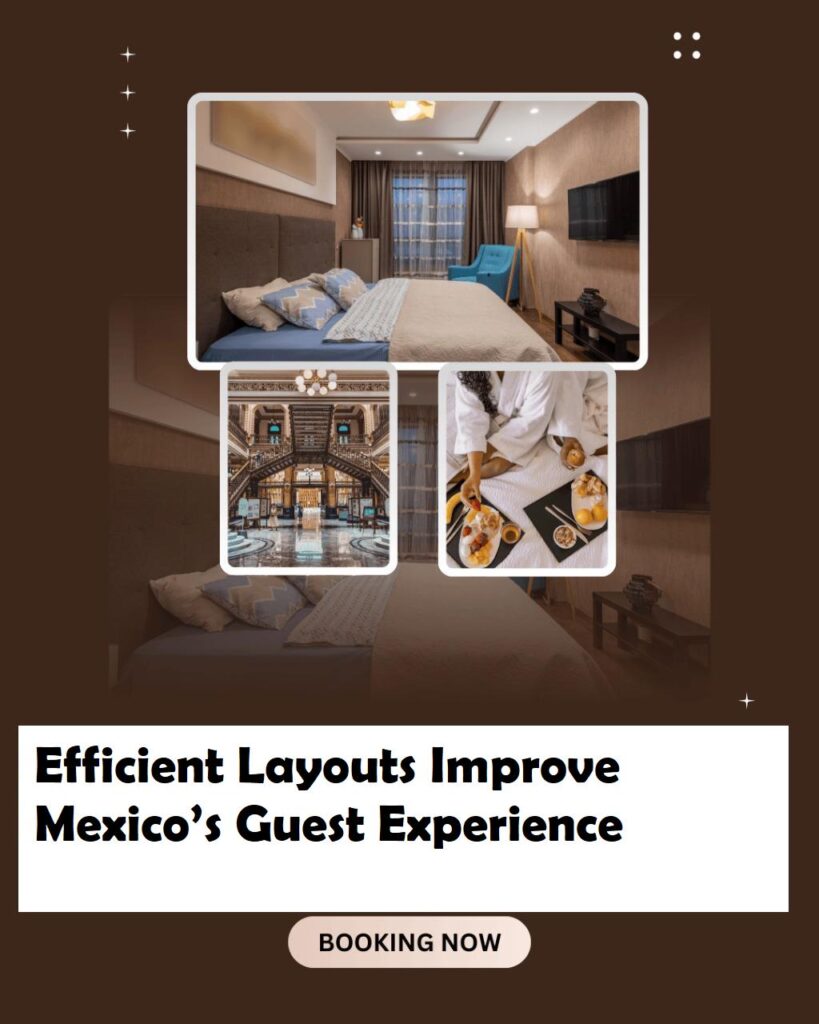
1) The Arrival Sequence That Calms You Down
A truly efficient hotel begins the moment you arrive. The best properties choreograph check-in as a soft landing rather than a transaction—shaded entry courts, a short, direct path to reception, and lounge-style seating that turns “waiting” into “settling in.” In Mexico’s warm climates, the smartest layouts use breezeways and open-air corridors to reduce the sense of enclosure. You’re never trapped in a maze of hallways; instead, you drift through spaces where light, air, and view lines do the guiding. The result is subtle: your shoulders drop, your pace slows, and the hotel feels intuitive before you even know your room number.
2) Rooms Designed Around Real Living
Efficient layouts shine brightest in the guestroom, where luxury often comes from what doesn’t happen—no awkward furniture placement, no dead zones, no cramped corners pretending to be “cozy.” Mexico’s top hotels are increasingly designing rooms like elegant micro-residences. Storage is integrated rather than tacked on. Seating is positioned where it’s actually useful—near a window, facing a terrace, beside a reading lamp that doesn’t glare. Bathrooms are planned to reduce bottlenecks: double vanities that don’t steal counter space, showers with easy access, and separate water closets that preserve privacy. When the room is laid out with quiet intelligence, relaxation feels immediate, not something you have to arrange.
3) Seamless Indoor–Outdoor Flow
Mexico’s most satisfying stays treat the outdoors as part of the room, not an add-on. Efficient hotels align terraces, plunge pools, and garden paths so that you move naturally between climates—cool shade to sun-warmed deck, bedroom to patio, spa to quiet courtyard. The best examples avoid cluttered outdoor programming. Instead, they create a few “perfect” zones: a pool that isn’t hidden but also isn’t the center of noise, loungers positioned to catch breezes, and paths that offer privacy without feeling isolated. This planning turns the property into a lived environment, where you’re encouraged to wander without getting lost or overwhelmed.
4) Public Spaces That Don’t Compete With Each Other
Luxury hotels can sometimes feel like a collection of competing ideas: a lobby that’s too loud, a restaurant that’s too exposed, a bar that blocks circulation. Efficient layouts solve this by giving each public space a distinct purpose and a clear relationship to the others. In Mexico, the strongest properties use layered zones—social energy near the center, quieter seating in the periphery, and transitional spaces that let you recalibrate. Restaurants are often placed to capture evening light and avoid cross-traffic. Bars sit where they can feel lively without spilling into everyone’s dinner. When a hotel’s public spaces are laid out with discipline, the atmosphere becomes more refined—and guests feel like they have choices, not obligations.
5) Quiet Luxury Through Smart Circulation
Circulation is the invisible language of a hotel. When it’s done well, you never notice it—because you’re never frustrated. Mexico’s most guest-friendly hotels minimize confusing turns and long internal routes. Elevators are placed where they make sense. Staircases are beautiful enough to use willingly. Service routes are discreet, which means you experience calm rather than constant operational movement. Even sound is shaped by layout: buffers between rooms, thoughtful placement of mechanical systems, and landscaping that absorbs noise. This is quiet luxury in its purest form—comfort created by design intelligence rather than constant ornament.
Q&A: Planning Your Next Mexico Stay
Q: Which Mexico destinations best showcase hotels with smart, efficient design?
Look to places where architecture is central to the identity: Mexico City for design-led urban properties, Oaxaca for boutique hotels with courtyard planning, Baja California Sur for seamless indoor–outdoor resorts, and the Riviera Maya for jungle-integrated layouts that prioritize privacy.
Q: What should I look for when choosing a hotel based on layout?
Prioritize clear arrival flow, practical room zoning (sleeping, lounging, bathing), privacy buffers, and outdoor spaces that feel connected—not like an afterthought. If photos show a room that “makes sense” at a glance, that’s usually a great sign.
Q: Can you recommend a few hotels in Mexico known for strong design and guest experience?
Here are several worth considering depending on your style: Casa Oaxaca (Oaxaca) for courtyard calm, Hotel Escondido (Puerto Escondido area) for minimalist flow near nature, Chablé Yucatán (Yucatán) for spa-forward planning and privacy, Las Ventanas al Paraíso (Los Cabos) for resort-scale layout discipline, and Condesa DF (Mexico City) for an urban design lens that still feels livable.
Conclusion
Efficient layouts don’t announce themselves—they serve you. In Mexico’s finest hotels, the most exclusive feeling often comes from ease: a room that supports real rest, a property that invites exploration without confusion, and public spaces that feel curated rather than crowded. When design prioritizes flow, proportion, and privacy, the experience becomes quietly elevated. You’re left with something rarer than glamour: the sense that everything was built to make your time feel effortless—and that, in itself, is a refined kind of luxury.