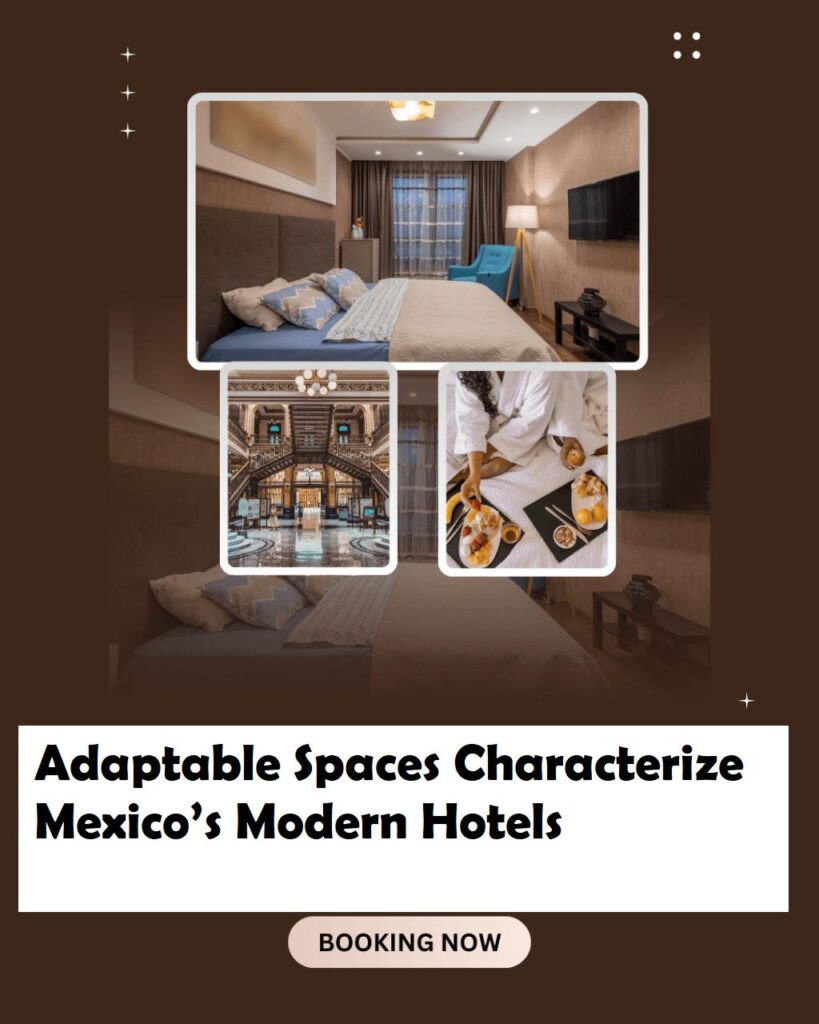
Mexico’s modern hotel scene has learned a new kind of luxury language—one spoken through adaptable spaces. Instead of fixed routines and rigid room layouts, today’s best stays offer environments that shift with your mood: bright corners that become quiet work nooks, terraces that turn into sunset lounges, and suites that feel equally suited to a slow morning ritual or a lively evening with friends. This flexibility doesn’t dilute elegance; it sharpens it. In destinations where design, climate, and culture meet so naturally, adaptability becomes the detail that makes a hotel feel personal—like it was prepared for you before you arrived.
Coastal Suites That Move With the Day
Along Mexico’s shores, modern hotels build their identity around the rhythm of light and wind. Rooms are planned to open and close effortlessly: sliding panels that invite sea air in the morning, linen drapes that soften afternoon glare, and wide terraces that act as a second living room. The best coastal properties treat indoor-outdoor living as a daily option rather than a once-in-a-while feature. You can start your day with coffee at the edge of the horizon, retreat into a cool, shaded interior for midday calm, then return outside as the sun lowers and the entire suite becomes a front-row seat to the evening.
Urban Hotels With Modular Comfort
In Mexico’s cities, adaptability looks more architectural—clean lines, thoughtful zoning, and furniture that shifts purpose without feeling “convertible.” Modern urban hotels often build rooms around a central idea: one space, many modes. A slim desk becomes a creative station; a lounge chair rotates toward the skyline for reading, then angles toward the bed for conversation. Lighting is layered so you can move from focused brightness to warm, low glow without leaving your seat. The result is a room that supports real life: business calls, late-night snacks, quick outfit changes, and those slow minutes of stillness that make city travel feel balanced.
Courtyards, Corridors, and Quiet Transitions
Some of Mexico’s most memorable modern hotels focus less on dramatic statements and more on how you move. They design transitions—those small journeys from lobby to elevator, from corridor to room, from pool to bar—with intention. Courtyards become flexible social zones: calm in the morning, quietly lively at night. Shaded walkways create privacy without isolation. Even the sound design matters—soft materials that reduce echo, water features that create gentle cover, landscaping that makes a property feel wrapped in its own atmosphere. Adaptability here isn’t a gadget or a trick. It’s the hotel’s ability to feel serene or social depending on what you need.
Wellness Spaces That Feel Custom, Not Performative
Modern Mexican hotels increasingly treat wellness as a spatial experience rather than a schedule. Instead of pushing you toward a single spa routine, they offer rooms and public areas that naturally support recovery. Think: breathing space in layouts, balconies that encourage morning stretches, and bathrooms designed for long, unhurried rituals. Some properties integrate wellness corners—small meditation terraces, plunge pools, outdoor showers, or shaded daybeds—so you can choose your own pace. The most refined hotels make it feel effortless: you don’t “go do wellness.” You simply exist in a setting that makes calm the default.
Social Spaces That Shift From Day to Night
The best modern hotels in Mexico design their shared spaces like a sequence of scenes. A café becomes an afternoon lounge. A pool deck turns into a soft-lit gathering space. Bars feel intimate early and magnetic later, without needing loud theatrics. Seating is usually arranged in layers: solo chairs for quiet moments, semi-private corners for couples, and larger group zones that don’t disturb the rest of the room. This is the luxury of choice—being able to participate or disappear, to socialize lightly or fully, all within the same beautifully considered environment.
Q&A: Choosing Mexico’s Best Modern Hotels for Adaptable Living
Q: Which Mexico destinations are best for modern, adaptable hotel design?
Beach destinations like Tulum, Los Cabos, and the Riviera Maya often lead with indoor-outdoor flexibility, while Mexico City excels at modular urban comfort and design-forward interiors. Oaxaca and San Miguel de Allende add character through courtyards and intimate transitions.
Q: What are a few hotels worth considering for modern design and flexible spaces?
In Mexico City, look at Sofitel Mexico City Reforma for polished city views and refined public spaces, or Casa Polanco for boutique elegance with a residential feel. For design-minded beach stays, Habitas Tulum offers a nature-integrated atmosphere, while Viceroy Los Cabos is known for dramatic architecture and strong spatial planning.
Q: How do I know if a hotel’s “modern design” will actually feel comfortable?
Look for details that support real living: layered lighting, privacy options (screens, drapes, terraces), furniture that invites use (not just photos), and public areas with both social and quiet zones. The best modern hotels feel warm, not sterile.
Conclusion
“Adaptable spaces” aren’t a trend in Mexico’s modern hotels—they’re a signature of how contemporary luxury is evolving. The most compelling properties understand that travelers want beauty that works: rooms that breathe with the climate, interiors that shift with the day, and social spaces that let you choose your own level of connection. In these hotels, exclusivity isn’t just about price or prestige. It’s about having a stay that responds to you—offering the rare comfort of control, calm, and effortless elegance in every moment.