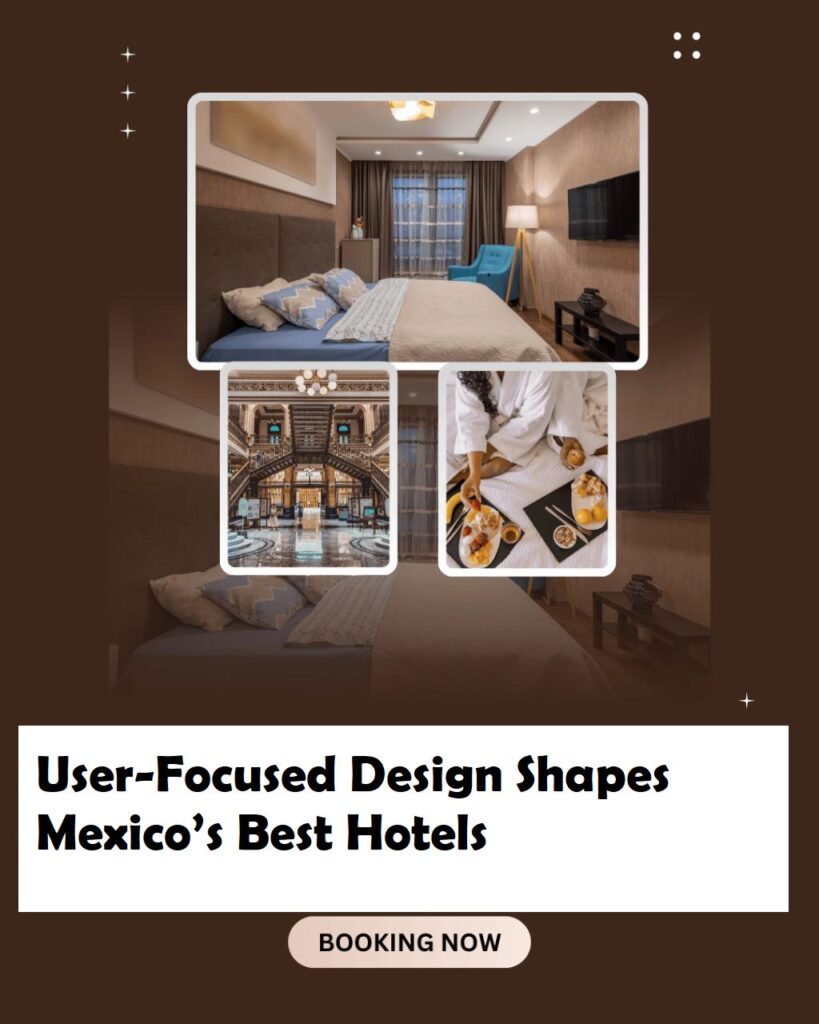
In Mexico, the most memorable hotels aren’t always the loudest or the most lavish—they’re the ones that seem to understand you. User-focused design is less about showing off and more about shaping a stay around comfort, privacy, flow, and those subtle details that make travel feel effortless. From the way natural light lands on a morning coffee to the quiet logic of a room that never makes you “figure it out,” Mexico’s best hotels are increasingly defined by empathy: spaces designed to anticipate needs, soften stress, and elevate every moment without demanding attention.
1) The Arrival That Feels Like Exhale
The first signal of user-first design begins before you even reach your room. At Mexico’s most thoughtful hotels, arrival is choreographed for calm: shaded walkways, seating placed where you instinctively want to pause, staff who guide without crowding, and a lobby that feels more like a living room than a checkpoint. The best properties build a sense of orientation into the architecture—clear sightlines, gentle transitions, and intuitive paths that make you feel instantly grounded. Instead of forcing you to adapt, the space adapts to you, turning check-in into an exhale rather than a task.
2) Rooms That Move With Your Rhythm
A well-designed room does more than look good—it makes your day smoother. Mexico’s top hotels often embrace layouts that respond to real traveler habits: luggage space that doesn’t require improvisation, bedside lighting that’s truly usable, and seating that invites you to linger rather than perch. Soundproofing becomes a luxury all its own, especially in coastal destinations where nightlife can travel. Temperature controls are simple, not fussy; switches are where you reach for them; blackout curtains actually deliver. This kind of design doesn’t announce itself—it quietly makes the room feel like it was made for your routine.
3) Privacy as a Form of Luxury
In Mexico, privacy can be the difference between “beautiful” and “transformative.” User-focused hotels treat privacy as a core feature, not an upgrade: outdoor showers screened with greenery, plunge pools angled away from neighboring terraces, and pathways that reduce accidental intersections. Even shared spaces—lounges, pools, beach clubs—are often layered into smaller pockets, allowing couples, families, and solo travelers to find their own pace. The result is a sense of ease: you can be social when you want, invisible when you don’t, and always comfortable in between.
4) Materials That Feel Good, Not Just Look Good
Mexico’s design identity is deeply tied to materials—stone that stays cool underfoot, textured plaster, warm woods, handwoven textiles, and ceramics with a tactile honesty. In user-first hotels, these materials aren’t chosen solely for style; they’re chosen for how they feel. Floors that invite bare feet, linens that breathe in coastal humidity, furniture that’s crafted for long, slow evenings. Light is softened through screens and natural textures, turning brightness into glow. Every surface becomes part of the experience, shaping comfort through touch, temperature, and atmosphere.
5) Wellness That Doesn’t Feel Like a Schedule
The most refined wellness design in Mexico is integrated rather than isolated. Instead of making relaxation a separate “activity,” user-focused hotels bake it into daily life: quiet corners for reading, scent and acoustics that settle the nervous system, spa-like bathrooms that encourage lingering, and water rituals—plunge pools, steam rooms, outdoor tubs—that feel accessible rather than ceremonial. Fitness spaces are increasingly designed with natural air and views, while food offerings include lighter, vibrant choices without losing indulgence. Wellness becomes less about discipline and more about restoration, delivered in small, continuous ways.
6) Shared Spaces Built for Human Behavior
Great hotels understand how people actually use space. That means pool seating that includes shade and distance, bars that allow conversation without shouting, and restaurants that balance energy with intimacy. The best properties offer choices: lively zones for social travelers and quieter ones for those who came to decompress. Even the lighting shifts intelligently throughout the day, supporting morning freshness and evening softness. When shared spaces are designed for comfort—not just aesthetics—they become places you return to again and again, not just pass through for a photo.
Q&A: More Mexico Hotels to Consider
Q: Which Mexico destinations best showcase design-forward hotels?
A: Mexico City for bold contemporary design, Oaxaca for craft and cultural texture, Riviera Maya for nature-integrated luxury, and Los Cabos for dramatic architecture paired with ocean-facing calm.
Q: What hotel styles suit different travel moods?
A: For romance, choose intimate boutique properties with private terraces and plunge pools. For creative recharge, look for hotels with strong local art and quiet public spaces. For family comfort, prioritize properties with flexible room layouts and shaded, safe outdoor areas.
Q: What are a few standout hotels worth researching?
A: Consider Four Seasons Resort Punta Mita for seamless service and relaxed elegance, Rosewood Mayakoba for privacy and lagoon-side calm, Hotel Escondido (Oaxaca coast) for minimalist beach serenity, and Chablé Yucatán for wellness-centered luxury with a strong sense of place.
Conclusion
User-focused design is the new signature of Mexico’s best hotels—an approach that elevates travel through intuition rather than spectacle. When arrival feels calming, rooms follow your rhythm, privacy is protected, and materials are chosen for comfort as much as beauty, the experience becomes quietly extraordinary. These hotels don’t just host you; they support you—creating an exclusive kind of luxury where everything feels considered, effortless, and deeply personal long after you’ve checked out.